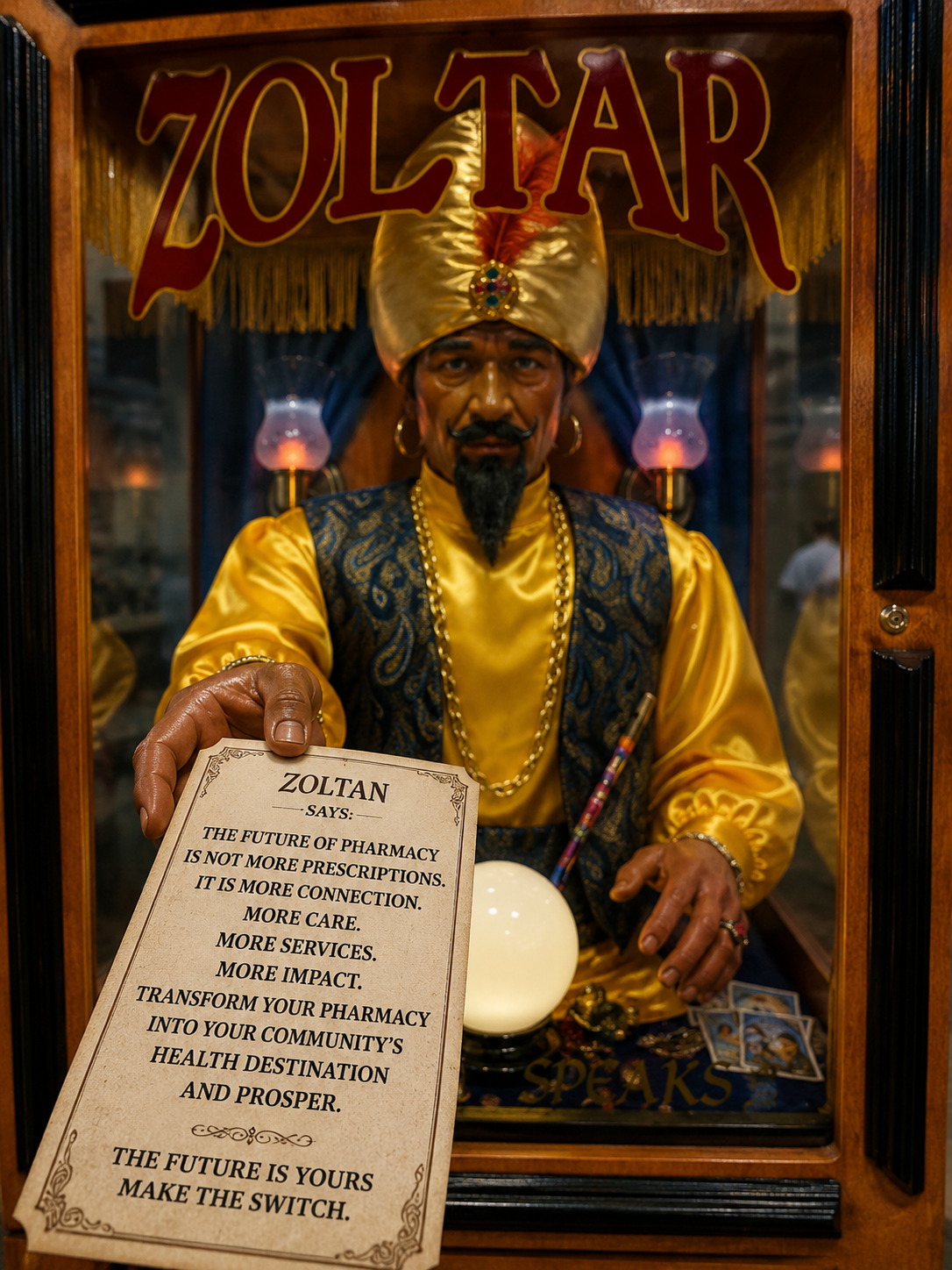
From traditional healthcare spaces to new longevity destinations: why prevention, architecture and business strategy must evolve together.
The Longevity Revolution Is Already Changing Healthcare
What if the future of healthcare were not primarily about treating disease, but about helping people remain healthier for longer?
This question is changing the way we think about pharmacies, medical clinics, wellness centers and even retail environments.
For decades, healthcare systems have largely concentrated on responding to illness. Today, a different approach is gaining momentum: prevention, early detection, personalized health services and long-term wellbeing.
Longevity is becoming one of the most significant forces influencing this transformation.
But the longevity revolution is not simply about living longer. It is about improving the quality of those additional years and creating new ways for people to engage with their health before problems arise.
For healthcare entrepreneurs, pharmacists and clinic operators, this represents a fundamental shift.
People are no longer looking only for places where they can receive treatment. They are increasingly interested in environments that help them understand, monitor and improve their health.
And these new expectations require new spaces, new experiences and new business models.
From Sick Care to Preventive Healthcare
Traditional healthcare and preventive healthcare are not competing approaches. They are complementary parts of a more complete system.
Medical treatment remains essential. But prevention and early intervention offer opportunities to address health risks before they develop into more serious conditions.
The World Health Organization recognizes healthy ageing as a global priority, particularly as population demographics continue to evolve.
This transformation affects much more than clinical practice.
It changes what people expect when entering a pharmacy, booking a health consultation or choosing a wellness service.
A conventional healthcare journey often begins when someone experiences a problem.
A prevention-oriented experience may begin with a conversation, a health assessment, a professional recommendation or an accessible screening service.
The relationship between the patient and the healthcare provider becomes more continuous, moving beyond individual episodes of illness.
This is where pharmacies, clinics and wellness destinations have an opportunity to redefine their roles.
Why the Longevity Economy Is Creating New Business Opportunities
Longevity is also becoming an important economic driver.
As demand for preventive healthcare, wellbeing and age-related services develops, businesses are exploring new ways to serve customers throughout different stages of life.
The opportunities extend across several sectors: medical diagnostics, nutritional support, physical wellbeing, professional consultations, healthcare technology and personalized services.
However, entering the longevity market does not automatically create a successful business.
A medical clinic equipped with the latest technology is not necessarily profitable. A pharmacy offering additional screening services does not automatically become a preventive healthcare destination.
A sustainable business requires more than an attractive concept. It requires a clear market position, an operational model and a strategy that connects services with real customer needs.
For pharmacy owners, this means understanding which opportunities are relevant to their communities.
Clinic investors, it means evaluating how professional services, customer experience and space utilization can work together.
For healthcare retailers, it means creating meaningful connections between products, services and trusted professional advice.
At Sartoretto Verna, this is the principle behind our Pharmacy Business Strategy: understanding the business before developing the architecture.
We analyze market opportunities, customer journeys, operational needs and positioning to define the type of environment that can support long-term growth.
The Rise of Longevity Clinics and Integrated Health Destinations
The growing interest in preventive healthcare is also influencing a new generation of clinics.
These environments bring together different professional activities, with the objective of creating a more coordinated health experience.
Depending on the market, local regulations and professional expertise involved, a longevity-oriented destination may combine medical consultations, screening services, health monitoring, nutritional counseling, wellness programs and other preventive activities.
What makes these concepts interesting is not simply the number of services available.
It is how those services are connected.
A customer should not feel as though they are visiting several unrelated businesses under one roof.
Instead, the environment should support a clear, intuitive journey in which the different services complement one another.
Privacy, accessibility, professional collaboration and effective communication all become essential.
The same principles apply to pharmacies that are gradually expanding beyond traditional dispensing and retail.
Our project for Lapucci Pharmacy, transformed into a PharmaHub, illustrates how a pharmacy environment can be redesigned around a broader experience of health, beauty and wellbeing.
It demonstrates an important principle: transforming a healthcare business begins by reconsidering the relationship between space, services and people.
Healthcare Retail Is Becoming an Experience
Retail has always been shaped by changing consumer behavior.
In healthcare, that transformation is particularly significant because people are not simply purchasing products.
They are seeking professional guidance, reassurance, convenience and trust.
A pharmacy customer may arrive looking for a particular product but also need advice on how to manage an ongoing health concern.
A patient visiting a clinic may value not only the medical consultation, but also the clarity of the process, the atmosphere and the sense of personal attention.
The physical environment influences these experiences.
An unclear layout, crowded consultation area or poorly communicated service can create unnecessary barriers.
On the other hand, an organized and welcoming healthcare space can make professional services easier to discover, understand and access.
In this context, architecture becomes part of the customer experience and an operational tool for the business.
The future of healthcare retail will not be defined by how many products can be displayed or how much technology can be installed.
It will depend on how effectively businesses combine professional credibility, relevant services and experiences that people genuinely value.
Designing Longevity: Why Architecture Matters
What should a healthcare environment designed for longevity actually look like?
There is no universal formula.
The right solution depends on the business model, the services offered, the local community, the operational requirements and the expectations of its users.
Nevertheless, several design principles become particularly important.
Accessibility and comfort. People of different ages and physical abilities need to navigate the space comfortably. Clear circulation routes, appropriate seating, lighting and signage contribute to an inclusive environment.
Privacy and trust. Preventive healthcare often involves personal conversations and sensitive information. Consultation areas must support confidentiality and professional interaction.
Flexibility. As services evolve, spaces may need to accommodate new equipment, technologies or professional activities without requiring a complete redesign.
Operational efficiency. Staff workflows, patient circulation and service delivery must be considered from the earliest planning stages.
Recognizable identity. A healthcare environment should communicate its positioning through architecture, materials, lighting and spatial organization.
At Sartoretto Verna, our approach to architecture for pharmacies, clinics and healthcare spaces brings these elements together.
We do not consider architecture an isolated aesthetic exercise.
We see it as the physical expression of a business strategy.
A beautiful clinic that cannot operate efficiently is not a successful project. A sophisticated pharmacy without a clear commercial and service strategy risks becoming an expensive renovation rather than a meaningful transformation.
The objective is to create environments where design, professional activities and economic sustainability reinforce one another.
The Pharmacy’s Opportunity in the Longevity Revolution
Among all healthcare environments, the community pharmacy has a distinctive advantage: accessibility.
For many people, a pharmacy is one of the most familiar and frequently visited healthcare destinations.
This relationship creates opportunities to increase awareness of preventive services, strengthen professional advice and support patients through different stages of life.
But these opportunities need to be developed carefully.
Not every pharmacy needs to become a medical clinic.
Not every pharmacy needs a large area dedicated to new services.
And not every longevity trend is relevant to every market.
The most effective starting point is to understand the pharmacy’s community, its existing capabilities and the services that could create meaningful value.
A pharmacy may find opportunities in preventive screening, appropriate health monitoring, nutritional support or professional partnerships, subject to local regulations and available expertise.
The physical environment can then be adapted to support that strategy.
A dedicated consultation space may improve privacy. Clearer communication can help customers understand the available services. Better organization can allow staff to move between retail and professional activities more effectively.
What matters is not the number of services introduced, but their relevance, quality and operational sustainability.
The longevity revolution does not require every pharmacy to become bigger. It requires pharmacies to become more strategic.
Prevention and Profitability: Building a Sustainable Model
One of the most important challenges for healthcare entrepreneurs is finding the balance between improving access to care and maintaining a financially sustainable business.
Preventive healthcare may create opportunities for recurring professional relationships, additional services and stronger differentiation.
However, these opportunities cannot be evaluated in isolation.
Every new service requires an understanding of demand, pricing, staffing, equipment, regulations, space utilization and operating costs.
A service may be clinically valuable without being financially viable in a particular location.
Likewise, a commercially attractive concept must still deliver meaningful value to patients.
The challenge is to find a model in which both objectives can coexist.
At Sartoretto Verna, we believe that architecture, commercial strategy and operational planning must be developed together.
This is what being Pharmacy Business Architects means: designing not only the appearance of a healthcare destination, but the conditions that allow it to function as a business.
Because profitability is not the opposite of better healthcare.
When managed responsibly, financial sustainability allows businesses to invest in professional expertise, technologies, facilities and the continuous improvement of their services.
The Future of Longevity Will Be Built Around People
Technology is accelerating the evolution of preventive healthcare.
Digital health platforms, diagnostic tools and advanced monitoring systems are creating new possibilities for healthcare providers and patients.
But technology alone cannot create a successful health experience.
People still need to understand the services being offered. They need to feel comfortable in unfamiliar environments. They need confidence in the professionals who advise them.
This is why the human element must remain central to the design of longevity destinations.
The most advanced equipment cannot compensate for a confusing patient journey or an uncomfortable consultation experience.
Healthcare architecture needs to connect innovation with human needs.
It must make sophisticated services approachable and create an environment in which professional expertise is visible, accessible and trusted.
The ambition should not simply be to introduce more technology into healthcare spaces.
It should be to make better healthcare experiences possible.
The Longevity Revolution Is an Opportunity to Rethink Healthcare Spaces
The longevity revolution is changing the conversation around health, prevention and wellbeing.
For healthcare entrepreneurs, it introduces opportunities to develop new services and business models.
Pharmacies, it creates possibilities to strengthen their role within their communities.
For architects, it demands a deeper understanding of how space, technology, professional care and business performance interact.
At Sartoretto Verna, we have spent decades working at the intersection of these disciplines, developing environments that respond to the evolution of pharmacy and healthcare.
Our belief remains unchanged: successful spaces begin with a clear vision of the people they serve and the business they need to support.
Longevity is not just about adding years to life. It is about rethinking the places, services and experiences that help people live those years better.
And the businesses that understand this transformation will be better prepared to design the next generation of healthcare destinations.
Is Your Pharmacy or Healthcare Business Ready for the Longevity Era?
Developing a longevity clinic, integrating preventive healthcare services or repositioning an existing pharmacy requires more than a new interior design concept.
It requires an understanding of your market, your customers, your operating model and the opportunities your space can support.
Sartoretto Verna combines architecture, business intelligence and healthcare retail strategy to help entrepreneurs transform their vision into functional, distinctive and sustainable environments.
Discover our strategic approach or book a consultation with our team to explore your next healthcare project.