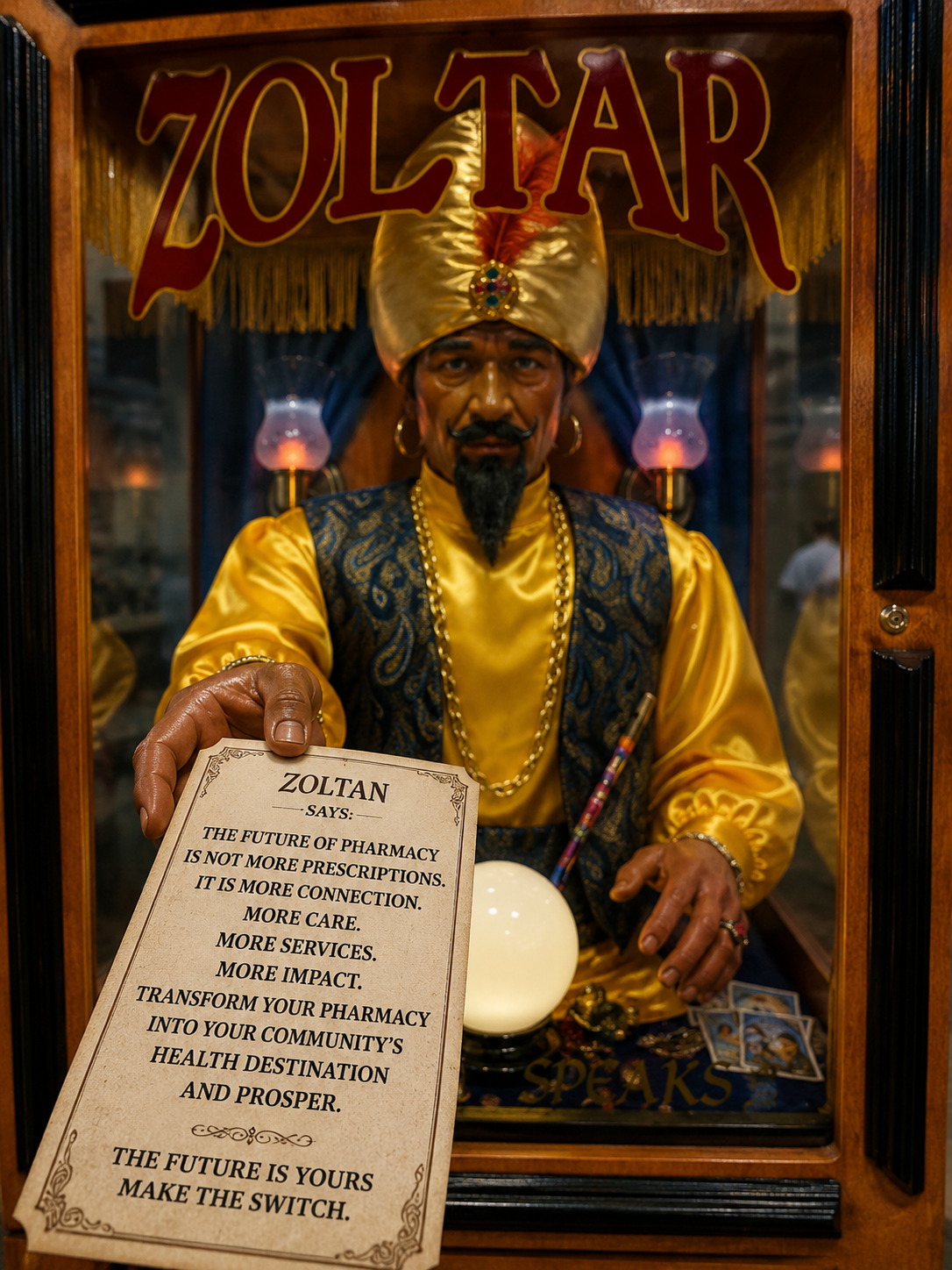
How integrated healthcare, pharmacy design and new business strategies can help people live not just longer, but better.
Living Longer Is Not Enough. We Need to Live Better.
The world’s population is living longer than ever before. But longer lives do not automatically mean healthier lives.
According to the World Health Organization, by 2030, one in six people worldwide will be aged 60 or over. This demographic transformation is already changing how healthcare systems operate, how communities organize their services and, above all, how people think about prevention and wellbeing.
The question is no longer simply how to extend life expectancy.
The real challenge is how to extend the years we live in good health.
And this challenge opens a new chapter for pharmacies, clinics and healthcare entrepreneurs.
At Sartoretto Verna, we believe that the future of healthcare will depend not only on medical and technological innovation, but also on our ability to rethink the environments where prevention, professional care and everyday wellbeing come together.
Because longevity is not only a medical challenge. It is also a design challenge, a business opportunity and a collective responsibility.
Longevity and the Changing Role of Healthcare
On July 1, 2025, in the historic setting of the Nobile Collegio Chimico Farmaceutico – Universitas Aromatariorum Urbis in Rome, healthcare professionals, researchers and policymakers gathered to discuss one of the most important challenges of our time.
The event, “Longevity and Demographic Winter: Impact on the Pharmaceutical Profession and the Role of the Pharmacy,” organized by the Giacomo Leopardi Foundation and the Order of Pharmacists of Rome, explored how population ageing is transforming healthcare needs and professional responsibilities.
Among the speakers, Professor Ennio Tasciotti, Director of the Human Longevity Program at IRCCS San Raffaele in Rome, highlighted the growing importance of research, prevention and innovative approaches to age-related diseases.
As people grow older, the risk of cardiovascular diseases, cancer and chronic respiratory conditions generally increases. These conditions represent major challenges for healthcare systems worldwide.
Ageing is inevitable. But the way we respond to it can change.
Rather than focusing exclusively on treating diseases after they develop, healthcare needs to create more opportunities for prevention, early intervention and continuous support.
This is precisely the direction encouraged by the World Health Organization’s Decade of Healthy Ageing 2021–2030, a global initiative promoting age-friendly environments, integrated care and greater collaboration among public institutions, healthcare professionals, communities and the private sector.
The implications extend far beyond hospitals.
They directly concern the future of the neighborhood pharmacy, the medical clinic and every environment designed around people’s health.
From Traditional Pharmacy to Integrated Healthcare Hub
For decades, pharmacies have been recognized primarily as places where people obtain medicines and professional advice.
Today, that role is evolving.
Pharmacies are increasingly involved in prevention, health monitoring, patient education and services that complement traditional pharmaceutical care.
At the same time, medical clinics are exploring more integrated approaches, bringing together different disciplines and supporting patients throughout their healthcare journeys.
The opportunity lies in connecting these two worlds.
Imagine a healthcare environment where a patient can receive pharmaceutical advice, access appropriate screening services, consult healthcare professionals and receive guidance on preventive care through a coordinated experience.
Not necessarily in a large medical complex, but in an accessible, well-organized environment designed around the real needs of its community.
This is the idea behind the Clinic + Pharmacy model: a healthcare ecosystem in which different professional services work together to create a more continuous and accessible experience.
The exact combination of services depends on local regulations, clinical responsibilities and market needs. But the underlying principle remains the same.
Healthcare should become more connected, more accessible and increasingly focused on prevention.
We have already explored this evolution through projects such as Lapucci Pharmacy, transformed into a PharmaHub dedicated to health and wellbeing, where architecture and spatial organization support a broader vision of the pharmacy’s role.
Why Pharmacy and Clinic Design Matter for Longevity
A healthcare model cannot evolve without reconsidering the spaces in which it operates.
Introducing additional services into a traditional pharmacy layout is not necessarily enough to create an integrated healthcare experience.
A consultation room alone does not make a pharmacy a healthcare hub.
The real transformation begins by understanding how patients move through the space, how professionals collaborate, which services should be accessible and how different activities can operate efficiently.
For example, a longevity-oriented pharmacy or clinic may require private consultation areas, accessible circulation routes, welcoming waiting spaces and clear connections between retail activities and professional services.
It must also consider the needs of different generations.
An older patient may require greater accessibility, comfortable seating and clear wayfinding. A younger customer may be looking for preventive services, nutritional advice or a more personalized approach to wellness.
Both should feel comfortable, respected and confident in the professionals they encounter.
Design must make healthcare easier to access, understand and experience.
This is why Sartoretto Verna approaches pharmacy and healthcare architecture as a combination of spatial planning, professional workflows, brand identity and business strategy.
The objective is not simply to create attractive environments, but to develop places where services, people and commercial activities can function together.
Prevention as a Sustainable Business Strategy
The growing interest in longevity also raises an important question for pharmacy owners and healthcare entrepreneurs.
How can prevention become part of a sustainable business model?
The answer does not lie in adding as many services as possible.
It lies in identifying the services that respond to actual community needs, understanding how they can be delivered and creating the operational conditions required to support them.
A pharmacy located in an ageing residential community may have different opportunities from one situated in a business district or a rapidly developing urban area.
Its strategy should therefore begin with an analysis of the local population, competitive environment, patient needs and existing healthcare services.
From there, pharmacy owners can evaluate which preventive care activities, wellness services or professional partnerships are appropriate, feasible and financially sustainable.
Space planning, staffing, communication, service capacity and profitability must all be considered together.
This approach reflects our philosophy as Pharmacy Business Architects.
At Sartoretto Verna, business strategy comes before interior design. We analyze the pharmacy’s positioning, customer journeys, market opportunities and operational needs before translating them into an architectural project.
Prevention can create new opportunities for patient relationships, service development and business differentiation. However, sustainable results require planning, professional expertise and a clear understanding of costs and demand.
Profitability and social responsibility should not be treated as opposing objectives. A well-designed business model can support both.
Creating Healthcare Environments for Every Generation
Longevity is often associated exclusively with older people.
In reality, healthy ageing begins much earlier.
Prevention, lifestyle choices, access to professional advice and continuity of care influence health throughout a person’s life.
This means that the pharmacy of the future should not be designed exclusively for senior patients.
It should be capable of welcoming different generations and responding to changing needs over time.
The WHO’s approach to healthy ageing emphasizes environments that enable people to maintain their abilities, participate in their communities and preserve their independence for as long as possible.
Architecture has a role to play in making this possible.
Lighting, acoustics, accessibility, privacy, intuitive layouts and comfortable environments are not merely aesthetic considerations. They influence how people perceive and use healthcare spaces.
A well-designed pharmacy can help patients feel more confident when seeking advice, while thoughtful clinic layouts can support privacy, professional interaction and a more comfortable care experience.
These principles also apply to the way healthcare organizations communicate their services.
Clear, recognizable areas and intuitive patient journeys make complex offerings easier to understand.
And when patients understand what a healthcare environment can offer them, they are better equipped to make informed decisions about the services they need.
The Future of Healthcare Requires Collaboration
One of the strongest messages emerging from the debate on longevity is that no single professional, organization or sector can address the challenge alone.
Pharmacists, physicians, researchers, architects, healthcare entrepreneurs and policymakers all have different but complementary responsibilities.
Pharmacists contribute accessibility, professional expertise and relationships with local communities.
Clinicians provide diagnosis, treatment and specialized medical care.
Researchers develop knowledge and evidence-based innovation.
Entrepreneurs create the organizational and financial conditions for services to grow.
Architects translate these ambitions into physical environments that support the people who work in them and the patients who use them.
The challenge is to connect these contributions into coherent, sustainable healthcare experiences.
This is also why the conversation about longevity must include healthcare infrastructure, professional training, patient accessibility and new service models.
From an independent pharmacy in a small town to a technologically advanced medical center in a major international city, the goal remains the same: make prevention and quality healthcare more accessible throughout people’s lives.
Longevity Is a Design Challenge. And the Time to Act Is Now.
The future of healthcare will not be defined by one technology, one medical specialty or one architectural concept.
It will emerge from the ability to connect scientific knowledge, professional care, business strategy and human-centered environments.
For pharmacy owners, this means reconsidering the role their business can play within the local healthcare ecosystem.
Healthcare entrepreneurs, it means exploring new models where clinics, pharmacies and preventive services can complement one another.
For architects, it means designing places that respond to changing demographic realities while remaining functional, welcoming and economically sustainable.
At Sartoretto Verna, we believe that every healthcare project should begin with a fundamental question:
What kind of healthcare experience do we want to create for the people who will use this space tomorrow?
The answer requires more than furniture, technology or additional services.
It requires a vision, a strategy and an environment designed to bring them together.
Because the future of longevity is not simply about adding years to life.
It is about creating the conditions to add more life to those years.
Rethinking Your Pharmacy or Healthcare Project?
Are you considering integrating new healthcare services, developing a medical clinic or transforming your pharmacy into a more complete health and wellbeing destination?
Sartoretto Verna combines architecture, retail strategy and business analysis to develop healthcare environments around the needs of patients, professionals and entrepreneurs.
Discover our Pharmacy Business Strategy approach or book a consultation with our team to explore the opportunities for your project.